Dual Degree Program & Curriculum
Dual Degree Program
At Webb, every student follows a focused four-year path and graduates with a dual Bachelor of Science in Naval Architecture and Marine Engineering. You start your major from the first day of classes and build toward the full design of complex marine vehicles, while humanities coursework develops the communication, judgment, and perspective that engineers need to lead.
Naval Architecture
Naval architecture focuses on the design, performance, structure, stability, resistance, propulsion, and operation of vessels and floating structures. It asks how a ship moves, carries, endures, and safely fulfills its mission.
Marine Engineering
Marine engineering focuses on the systems that power and support a vessel, including propulsion, machinery, electrical, auxiliary, and control systems. It brings the ship to life as a complete working system.
Our Curated Course Approach
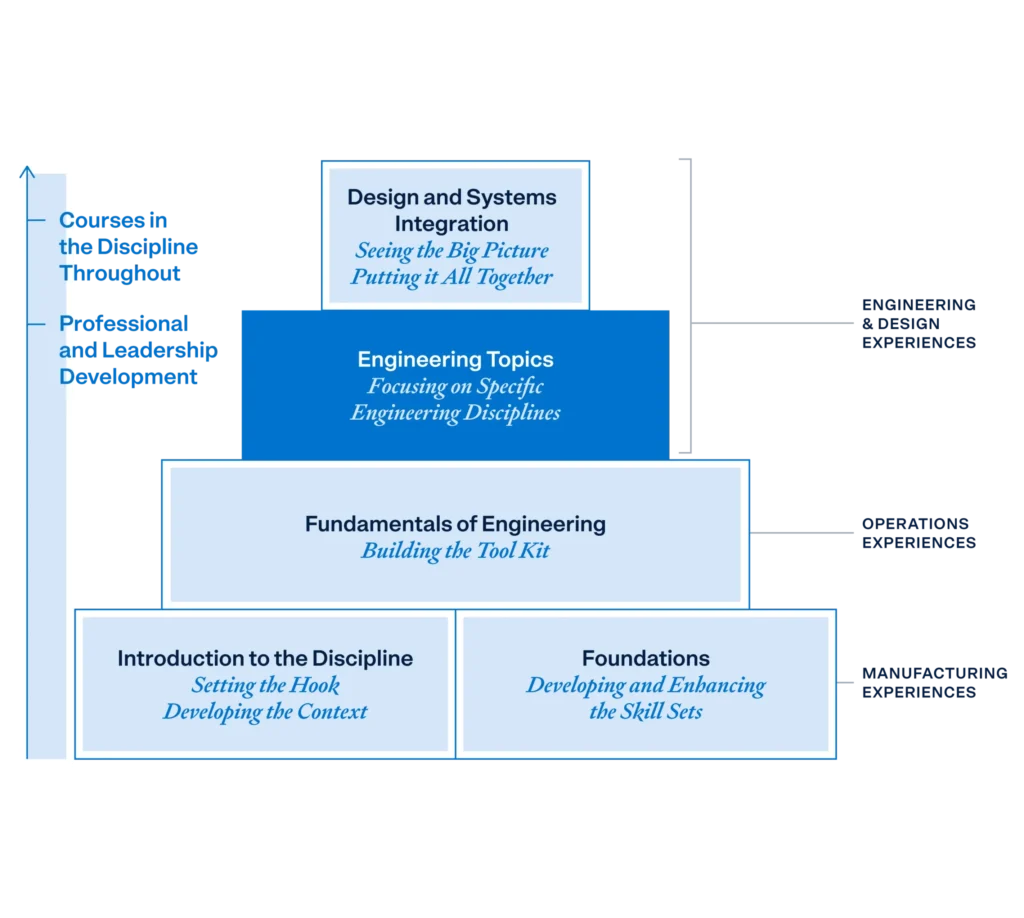
Webb’s curriculum is intentionally prescribed. Every student moves through the same rigorous academic sequence, building from foundational math, science, humanities, and engineering into advanced naval architecture, marine engineering, and ship design.
That shared path creates a powerful learning environment. Students work through challenges together, build a common technical language, and apply classroom learning through labs, design projects, engineering visits, and Winter Work.
By senior year, students are ready to synthesize everything they have learned through ship design, thesis work, professional communication, and industry-informed problem solving.
Academic Program
The Webb curriculum is built as a connected sequence. Each stage adds new technical depth, hands-on experience, and design responsibility, preparing students to enter the profession ready to contribute.
Foundations
Students begin with the essential tools of engineering: mathematics, science, communication, computing, humanities, and an introduction to the maritime world.
SC1
Chemistry
Explores general chemistry fundamentals with a focus on corrosion and renewable energy applications. Topics include stoichiometry, gas laws, thermochemistry, and electrochemistry.
MA2
Mathematics II – Calculus II
Covers Riemann integration, parametric/polar curves, 3D coordinate geometry, multivariable calculus, and optimization methods. Concludes with an in-depth treatment of infinite series.
SC5
Science Lab
A hands-on laboratory experience supporting Physics I and Chemistry through weekly alternating experimental modules.
SC2
Physics I – Elementary Mechanics & Harmonic Motion
A rigorous study of Newtonian mechanics, kinematics, rigid body dynamics, work-energy principles, and transverse/longitudinal wave theory.
SC4
Physics II – Simple Harmonic Motion, Light and Sound
Covers wave behavior in light and sound, electrostatic and electromagnetic fields, circuit analysis, and instrumentation (transitioning to include electricity & magnetism for upcoming classes).
ES1
Programming
Introduces computer logic, debugging, and programming applied to engineering problem solving using Excel, VBA, MathCAD, and MATLAB.
MA1
Mathematics I – Calculus I
Introduces real/complex numbers, vector operations, linear algebra, limits, derivatives, and Taylor polynomials. Develops abstract reasoning and mathematical modeling skills essential for engineering applications.
ME1
Introduction to Marine Engineering Systems
Fundamentals of shipboard propulsion plants—steam, diesel, gas turbine, and nuclear—including hands-on lab operation of steam plants and diesel engine overhaul.
NA1
Introduction to Naval Architecture
Overview of vessel types, industry sectors, regulatory bodies, and basic naval architecture principles through hands-on design projects.
SC6
Physics III – Electricity & Magnetism
Investigates electrostatic and electromagnetic fields, resistors, inductors, capacitors, magnetic properties of matter, circuit network theorems, and AC transients.
ES4
Engineering Graphics (CAD)
Fundamentals of 2D engineering drafting in AutoCAD and 3D parametric solid modeling using SolidWorks for marine-related components.
Engineering Fundamentals
Core analytical mechanics, thermal-fluid sciences, advanced mathematics, materials, and electrical systems.
SC3
Materials Science
Investigates structure-property-processing relationships of shipbuilding materials with an emphasis on steel, alloys, composites, phase equilibrium, and heat treatment.
ES2
Engineering Mechanics – Statics
Applies vector mechanics to physical bodies in equilibrium, analyzing forces, moments, trusses, centroids, friction, and moments of inertia.
ES3
Strength of Materials
Analyzes stress and strain in structural elements under axial, bending, torsional, and pressure loads using Mohr’s Circle, buckling theory, and deflection methods.
ES6
Engineering Mechanics – Dynamics
Kinematics and kinetics of particles and rigid bodies using work-energy, impulse-momentum, and 3D spatial motion analysis.
ES5
Thermodynamics
Classical engineering thermodynamics covering first and second laws, open/closed systems, entropy generation, power cycles, and refrigeration.
ES7
Fluid Mechanics
Fluid statics, manometry, the Bernoulli equation, control volumes, Navier-Stokes equations, dimensional analysis, and viscous pipe flow.
MA3
Math III – Engineering Mathematics I
Studies ordinary and partial differential equations, Fourier series, Laplace transforms, and numerical methods for physical engineering problems.
MA4
Math IV – Engineering Mathematics II
Covers vector calculus, Green’s/Stokes’/Divergence theorems, complex variable theory, and linear algebra matrices for fluid systems.
EE1
Electrical Engineering I – Circuits & Electronics
Steady-state AC single and three-phase power calculations, load analysis, filters, operational amplifiers, and digital logic circuits.
MA5
Probability and Statistics
Covers probability distributions, Rayleigh and Weibull wave spectra modeling, hypothesis testing, Monte Carlo simulations, and machine learning.
ES8
Vibrations
Single and multi-degree-of-freedom vibrations, forced/damped oscillations, resonance, vibration measurement, and shipboard vibration absorber design.
EE2
Electrical Engineering II – Machines & Controls
Electro-magnetic machinery, transformers, synchronous/asynchronous motors, shipboard electrical distribution, electric propulsion, and automation.
ES9
Hydrodynamics
Potential flow theory, boundary layer mechanics, CFD fundamentals, added mass, lifting surfaces/foils, and wave forces via Morison's equation.
OT1
Engineering Economics
Principles of compound interest, present worth, annual cash flow, rate of return, depreciation, taxes, and maritime equipment replacement analysis.
Naval Architecture & Marine Engineering Skills
Discipline-specific naval architecture and marine machinery courses focusing on hull behavior, performance, and auxiliary systems.
ME2
ME 2 – Marine Engineering Systems Components
Study of pumps, heat exchangers, valves, piping, HVAC, steering machinery, and auxiliary systems, alongside ship safety and cadet sea term prep.
ME3
ME 3 – Machine Design
Applies solid mechanics to marine machine elements including shafts, gearing, couplings, clutches, brakes, bolted joints, and fatigue analysis.
NA2
NA 2 – Ship Statics
Hydrostatics of ships covering buoyancy, intact/damaged stability regulations, limiting KG, drydocking calculations, and hydrostatic software tools.
NA4
NA 4 – Ship Structures
Modern ship structural design and analysis: hull girder loading, classification society rules, yielding/buckling failure, and structural FEA.
NA3
NA 3 – Ship Resistance & Propulsion
Decomposes ship resistance components, model-to-full-scale prediction methods, propulsor selection (propellers/waterjets), and hull-propulsor interaction.
ME4
ME 4 – Marine Engineering Applied Thermodynamics
Thermodynamic and aerodynamic design of combined steam/gas turbine plants, steam turbine fluid flow, and 1D/convective heat transfer.
NA5
NA 5 – Ship Dynamics (NA V)
Seakeeping responses in irregular wave spectra, strip theory calculations, slamming/deck wetness, calm-water maneuvering stability, and rudder design.
NA6
NA 6 – Advanced Computational Tools for Naval Architecture
Prepares students to critically evaluate simplifying assumptions and run advanced commercial Computational Fluid Dynamics (CFD) and FEA software.
NA7
NA 7 – Marine Transportation
Business and economic dimensions of commercial shipping lines, fleet chartering, maritime financial analysis, operations management, and linear programming.
Design & Systems Integration
The multi-semester capstone sequence bringing together the vessel, power plant, arrangements, and classification rules.
SD1
Ship Design I
Iterative design process from feasibility through preliminary design; small team project designing a small vessel with industry mentors, followed by large ship sizing.
ME5
ME 5 – Ship Auxiliary Systems Design
Project-based design of shipboard auxiliary mechanical systems (piping, hydraulic, HVAC) applying systems engineering, instrumentation, and feedback controls.
SD2
Ship Design II
Preliminary design of a large commercial vessel including general arrangements, powering analysis, lines plan development, and intact/damaged stability.
SD3
Ship Design III
Structural midship section design, classification society rule compliance, quasi-static hull girder loads, transverse bulkheads, and finite element analysis.
ME6
ME 6 – Ship Propulsion Systems
Complete machinery plant design supporting the vessel designed in the Ship Design sequence, vendor component selection, and diesel engine lab analysis.
Professionalism & Citizenship
Humanities, ethical practice, written/oral communication, cultural context, and industry experiential learning.
WW1-4
Winter Work Program
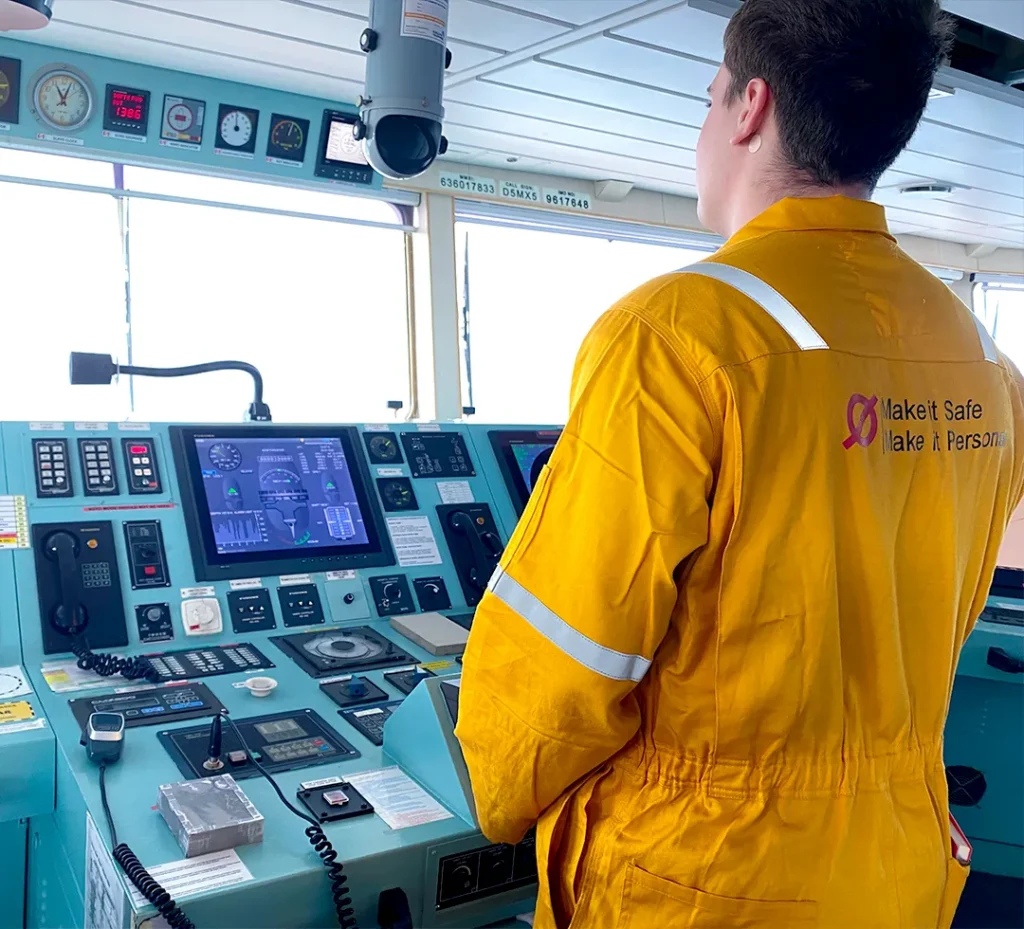
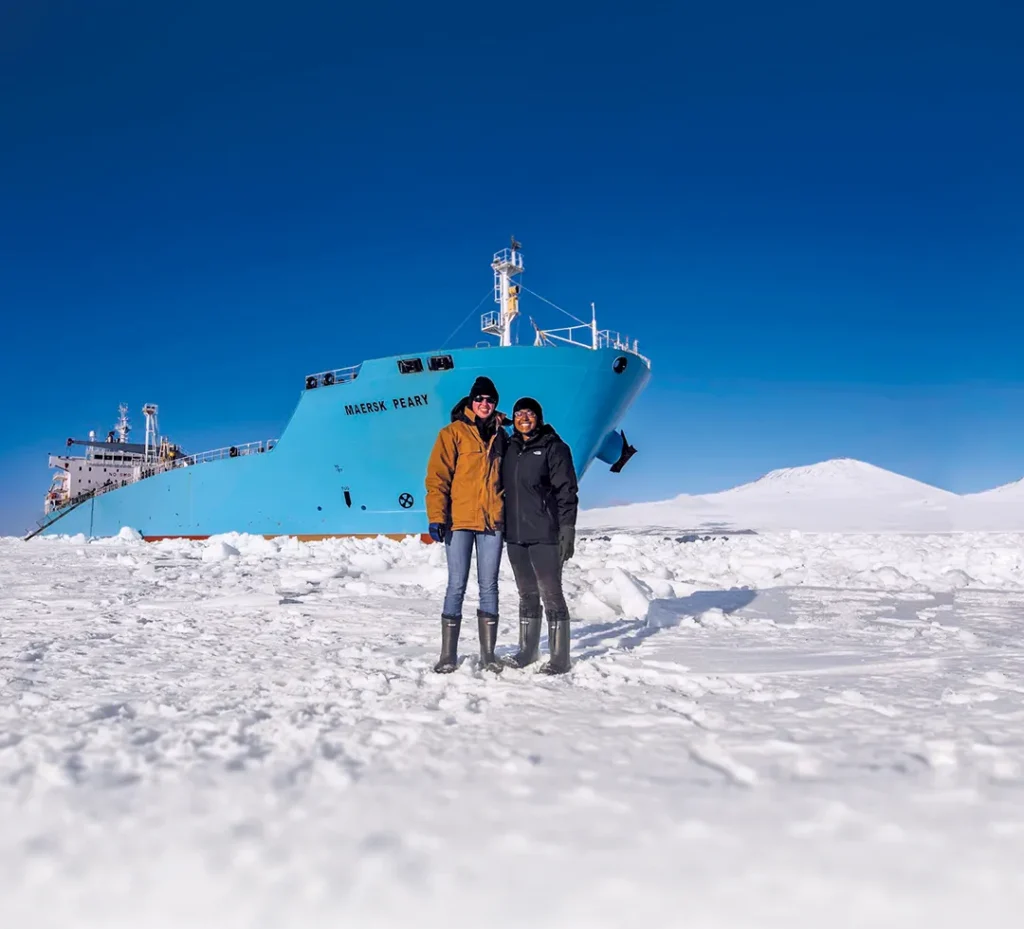
Four required eight-week winter internships spanning shipyard trades, sea term cadet placement, and professional engineering office work.
HU1
Technical Communication
Instruction and practice in technical writing, oral presentations, graphical data communication, and formal engineering report preparation.
HU2
Political Philosophy
Historical analysis of major Western political theorists from Plato to Burke, exploring justice, human nature, law, and the social contract.
LEC
Monday & Zeien Lecture Series
Mandatory weekly lectures and signature evening addresses featuring distinguished figures from industry, academia, government, and the arts.
VIS
Engineering Site Visits
Inspection trips to regional shipyards, drydocks, manufacturing plants, and active commercial and naval vessels to connect theory to practice.
HU3
Western Cultural Tradition I
Traces the development of Classical and Romantic worldviews through literature, art, architecture, and music from antiquity to the 19th century.
HU4
Western Cultural Tradition II
Examines late-nineteenth and twentieth-century Modernism through literature, visual arts, music, architecture, and film.
HU6
Critical Thinking and Analysis
Examines verbal and visual communication methods to evaluate source material, distinguish objective facts from false narratives, and form valid arguments.
HU5
Humanities / Social Science Elective
Elective course chosen from a specialized list of humanities and social science topics taught by full-time and expert visiting faculty.
HU7
Ethics: Society & The Profession
Investigates major moral philosophies and case studies across engineering, science, and business to evaluate the ethical codes governing the engineering profession.
HU8
Professional Presentations
Prepares seniors to deliver polished, high-impact oral presentations of their thesis work to faculty, classmates, and distinguished industry guests.
SEM
Senior Seminar
Weekly seminars led by guest executives covering personal finance, real estate, entrepreneurship, business operations, and industry trends.
Self-Directed
TH1-3
Senior Thesis
Independent or small-team research and design project in naval architecture or marine engineering, culminating in a written thesis and formal oral defense.
SPEC
Special Topics Elective
Selected three-credit elective giving seniors the opportunity to study specialized emerging maritime topics with distinguished visiting faculty.

Guaranteed Internships
Winter Work is built into the Webb experience. Each year, students complete an eight-week professional placement that connects classroom learning with real maritime practice.
These experiences help Webbies build confidence, judgment, technical understanding, and a professional network before they graduate.
Engineering Visits
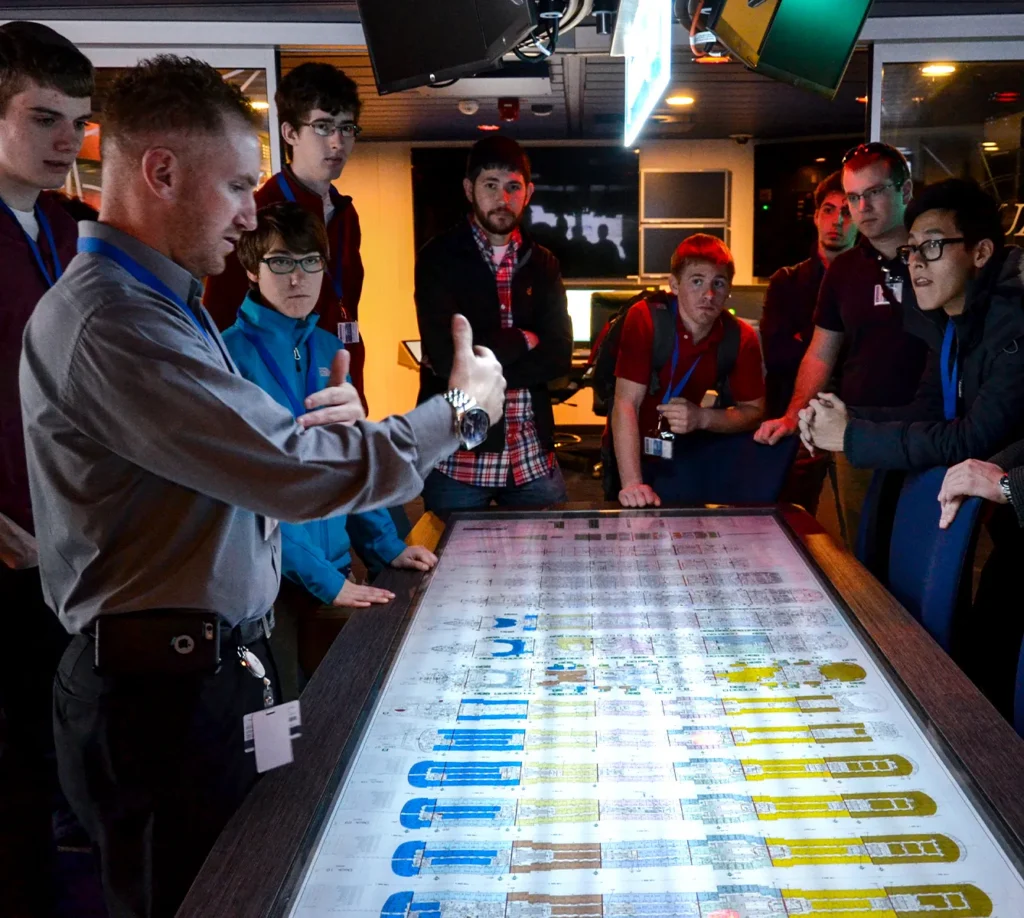
Webb students learn from the industry as well as from the classroom. Throughout the program, classes make engineering visits to shipyards, vessels, design offices, manufacturing sites, and other professional settings.
These visits give students a closer look at how engineering decisions are made, documented, tested, and implemented in the real world.
Lecture Series
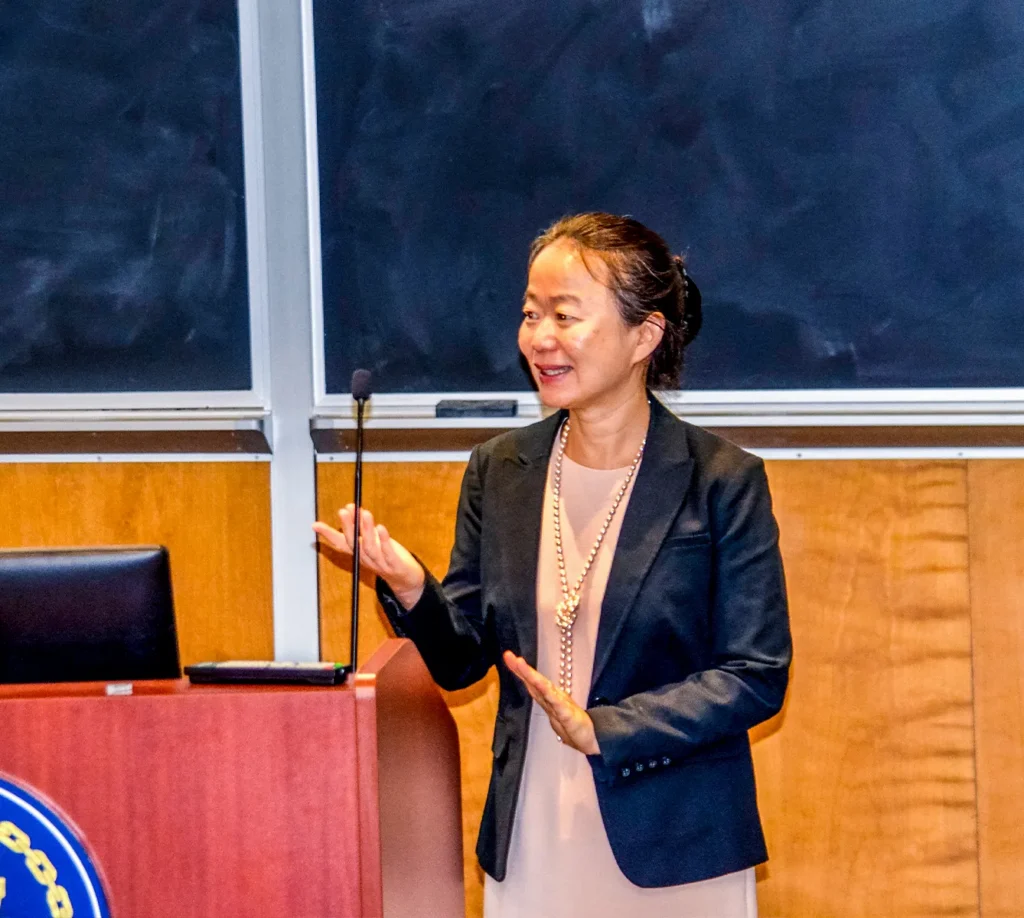
All Webb students attend the Monday Lecture Series, where speakers explore topics across engineering, history, industry, culture, policy, and current events.
The Zeien Lecture Series also brings distinguished voices from industry, academia, government, and the arts to campus, expanding the Webb education beyond the formal curriculum.
Course Catalog
The academic catalog provides the official record of Webb’s curriculum, course descriptions, academic policies, requirements, and calendar.
For the most current course information, review the latest catalog or download the class matrix to see how courses progress across all four years.
More Than Just A Degree
A Webb education reaches beyond technical training. Students graduate with professional experience, global perspective, ethical grounding, communication skills, and a lifelong network of alumni and industry connections

Established 1889

Build your future from day one.
At Webb, your major starts immediately—and so does your path toward engineering leadership.