
Renewed Investment in Webb from the Robert D.L. Gardiner Foundation Drives a Banner Admissions Cycle
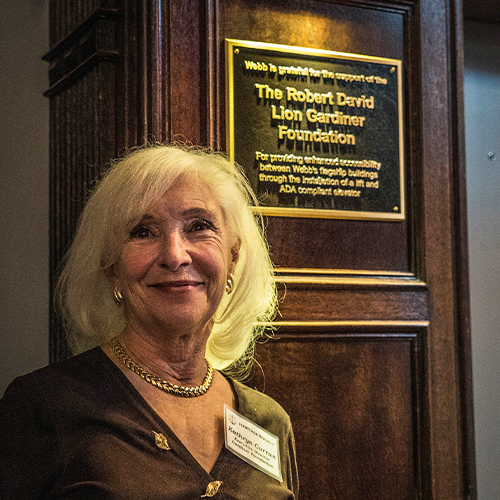
Since 2018, the Robert David Lion Gardiner Foundation has played a major role in supporting Webb’s ability to attract and retain the brightest students, regardless of financial means, by providing need-based grants to students for their room and board costs. With contributions of $325,000 over two multi-year grants, the Foundation’s giving helps make a Webb education truly accessible to all.
Webb is experiencing a banner year in admissions with a 32% increase in total applications over the last three years, a 34% increase in female applicants and an over-50% increase in students expected to require financial assistance if admitted, with an increasingly diverse applicant pool and growing numbers of first-generation college applicants. The final makeup of the Class of 2028 is still developing – the admissions process is underway, including student exams, interviews, and overnight visits which give prospective students an appreciation for what makes Webb special – and the support of our donors plays a key role in Webb’s commitment to meeting the full demonstrated need of Webb students.
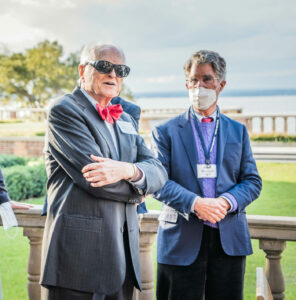
The Honorable Peter Fox Cohalan, Trustee of the Gardiner Foundation
“The Robert D. L. Gardiner Foundation proudly recognizes and supports Webb Institute’s steadfast commitment to maritime heritage and educational excellence. The Foundation is eager to further William Webb’s mission of attracting and educating tomorrow’s leaders in an extraordinary learning community focused on engineering and design in the maritime field. We are proud of our continued partnership with Webb,” said Kathryn M. Curran, Executive Director of the Robert David Lion Gardiner Foundation.
Students who have benefited from Gardiner Foundation grants echo a collective “thank you” for helping make their Webb education possible. While each Webb student is awarded a full-tuition scholarship, supported by contributions from generous Webb donors which augment the endowment, room and board costs represent a significant outlay for many families, and this additional support is vital to a successful Webb experience.
Amongst current and future Webbies are voices that resonate with hope and gratitude. Some know their life’s path and just need support to navigate it:
“During my college search, I was actively looking for schools with strong naval architecture programs. I then met a graduate of the United States Naval Academy and asked his opinion on what he felt was the best school in this discipline. Without hesitation, he said, ‘Webb Institute!’ After my first visit to Webb, it immediately became my school of choice,” said Rayne Duff ‘25.
Others come to Webb with a passion for engineering and are later exposed to the tight-knit maritime world. Meet Karissa Nieves ’27, whose passion is matched at Webb by the support she receives. “My favorite part of being here is the Webb community. For once in my life, I feel accepted by my peers and have found people that I really connect with.”
Webb’s unique Winter Work internships have just wrapped up, with our students gaining real-life experience working across the United States and around the world. Not only do they come back with tales of discovery, adventure, and friendship, but the internships play a key role in securing the 100% job placement that Webb has become known for.
We thank the Robert D. L. Gardiner Foundation for being part of the Webb legacy that is shaping the future, one student at a time.
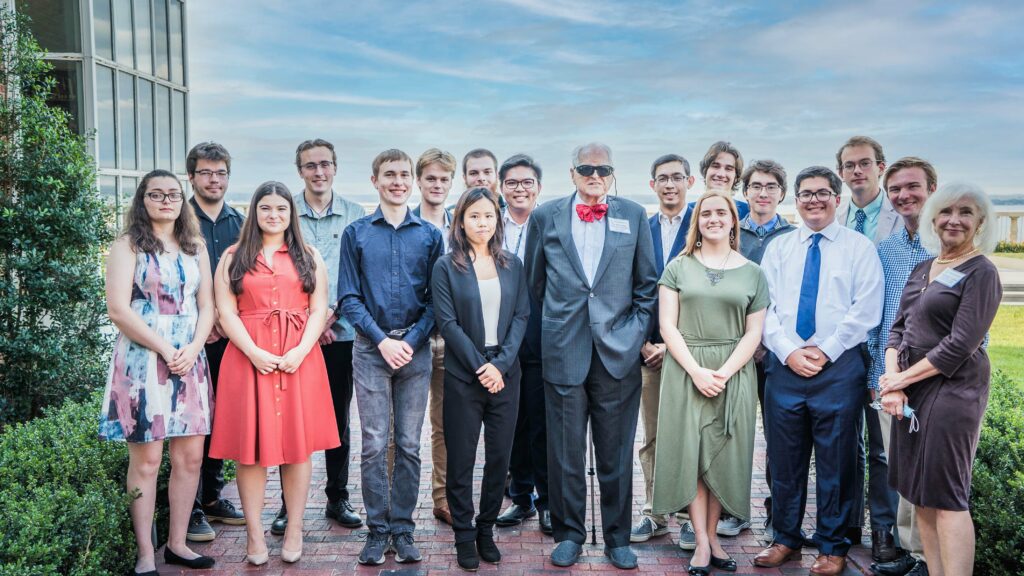
The Honorable Peter Fox Cohalan with a group of Webb scholarship honorees.
Professor Michael Martin named the Lester and Mandell Rosenblatt Professor of Marine and Electrical Engineering
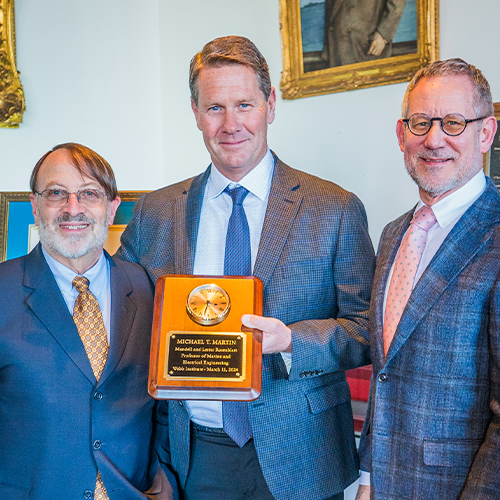
Webb Institute is proud to announce the promotion of Michael Martin to the position of Professor and his naming as the Lester and Mandell Rosenblatt Professor of Marine and Electrical Engineering. Professor Martin has continuously demonstrated his commitment and expertise in the realms of marine engineering.

Professor Martin received a Bachelor of Engineering from Manhattan College and a Master of Science in Electrical Engineering from the New York Institute of Technology (NYIT). He brings over 26 years of experience as a marine electrical engineer, specializing in a wide range of systems. His deep understanding of applicable codes, standards, and engineering practices has been instrumental in his role at Webb. His innovative work on the Hart Island Replacement Ferry, designing an all-electric, battery-operated ferry, emphasizes his commitment to sustainable engineering solutions. His work with the U.S. Marine Corps, developing an energy model for forward operating bases and a water conservation system prototype, further highlights his expertise in energy efficiency and sustainability.
At Webb, Professor Martin has taught a range of courses, including Programming with Applications, Physics III – Electricity and Magnetism, and Electrical Engineering I and II. His role as a thesis advisor has guided students through significant research projects.
Professor Martin has been a leader in the naval architecture and marine engineering community, serving as Regional Vice President with the Society of Naval Architects and Marine Engineers (SNAME) in the New York Metropolitan section. Professor Martin served as past Regional Vice President with SNAME and past Chairman of the New York Metropolitan section.
We look forward to Professor Martin’s continued contributions and leadership in shaping the future of Webb.
Dawn of a New Era in Webb Basketball
 Written by Richard Harris
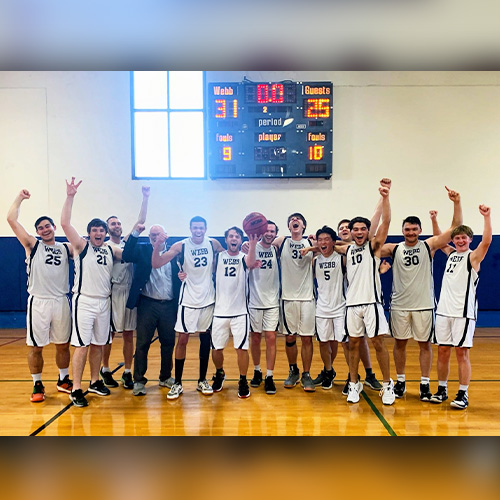
It was certainly at least twelve years ago, and maybe seventeen. Some think maybe longer. However that may be, on November 5, 2022, history was made at Webb. The basketball team won a game! The fall of 2022 saw an influx of freshmen players—Finn Ackerman, Caleb Breckenfelder, Kyle Breen, Ethan DesJardins, Jack Jackson, Aiden Kavanagh, Ryan Krimper, and Corbin Olney, and the return of juniors, Tim Lazouski, Max Mah, Jack Otto, the first appearance of junior Addison Pope. Four seniors—Gabe Allen, Jonathan Allen, Eric Heilshorn, and Mark Reed—anchored the starting team, with the fifth senior, Jacob Dillistin, always calm and dependable, a backup at the guard position. And then there was freshman Andrew Karafa, one of the very rare breed among Webb basketball players: he is 6’4” and he played high school basketball.
Coach Harris talking strategy with the team during a timeout.
So, when the first game of the 2022 season arrived, Coach Koleda and I were wondering how things might go. “Coach K’ had already led the soccer team to two victories in their season, which had ended only ten days before the basketball season began. Now it was up to the basketball team to try to find at least one win too. Unfortunately, true to the Webb tradition, the basketball players had not been able to shoot the 100 to 150 jump shots per day that is considered a bare minimum for development as an effective shooter.
Evidently, the players from the Culinary Institute hadn’t been able to do that either. At the end of a low-scoring first half, Webb led 15 to 10. With many shots being missed, it was important to control the backboards, and Gabe, Eric, and Mark did just that. When Culinary attempted a full-court press, Webb easily broke it. With his ballhandling skills, Jonathan was able to control the ball and set up the offense. As far as scoring was concerned, Andrew took care of most of that. He had ten points at the end of the first half.
A few minutes into the second half, with Webb holding its lead, Lauren Carballo began emailing the students on campus who weren’t at the game to come to the gym to see the possibility of a Webb win. Andrew added another eleven points in the second half. Down the stretch, Jonathan and Caleb added key baskets, and when the final buzzer sounded, the score was 31 to 25. I probably should have searched for a line from Shakespeare that would suit the moment, but I didn’t. I told Lauren that I was simply stunned.
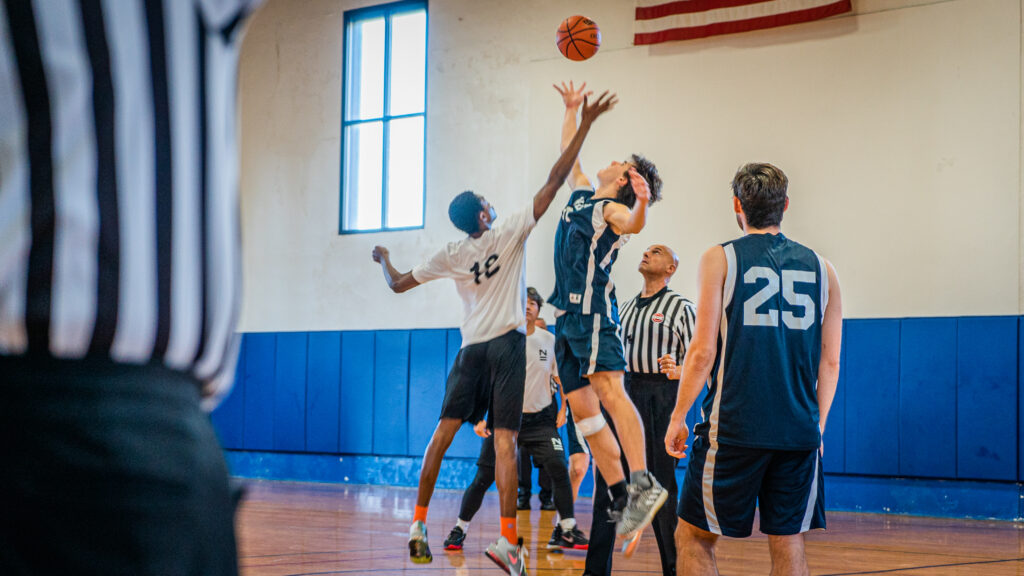
Andrew Karafa ’26 playing for a jump ball.
The remaining games proved more difficult, but I think everyone on the team will remember that day. The win was a tribute to the Webb players who came out for the team in the greatest number ever in Webb basketball history; to the leadership of the team captains, Jonathan and Mark; and to the players’ dedication and commitment to become better players and, win or lose, to enjoy playing the game.
Women’s Basketball
 Written by Shayla McCombs

Rebecca Carson ’26 driving to the hoop during a Webb home game.
The 2022 Women’s Basketball team started their season with four returning Seniors. Captains Erin Postma ’23 and Kasey Kennedy ’23 led the way along with Natalie Webb ’23 and Tori Kim ’23. The team was led by our new Women’s Basketball Coach Shayla McCombs, our very own Shanna Hamilton’s daughter! She was an All-Star player in High School and College. The team learned a lot about the game and enjoyed their season. Hopefully, we can get enough interest in the coming years to keep the Women’s team afloat. Congrats to all of the Lady Webbies. Shayla will be the Assistant Coach of the basketball team alongside Richard Harris this fall.
Remembering Angela Chao, a Leader in the Maritime World and Honored Member of the Webb Family
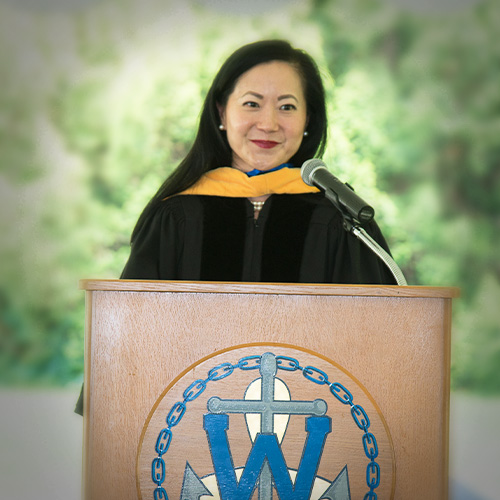
It is with deep sorrow that we learn of the passing of Angela Chao, a distinguished leader in the shipping industry and a cherished member of the Webb community. Angela, the Chair and CEO of the Foremost Group, tragically lost her life in a car accident earlier this week at age 50.
At Webb, we had the privilege of celebrating Angela’s leadership and contributions to the maritime world. Webb awarded her a Doctor of Science (Hon.) degree and inducted her as an honorary alumna into the Webb Alumni Association in 2019. Her Commencement address served to inspire and educate our future leaders in the maritime industry and made a positive impact here at Webb and the world at large.
Joining Angela for that day’s award was her father, Dr. James S.C. Chao, the founder of the Foremost Group, a company that serves as a model for all in the maritime industry with exceptional customer service, superior performance, and pioneering environmentally sustainable practices in the shipping industry.
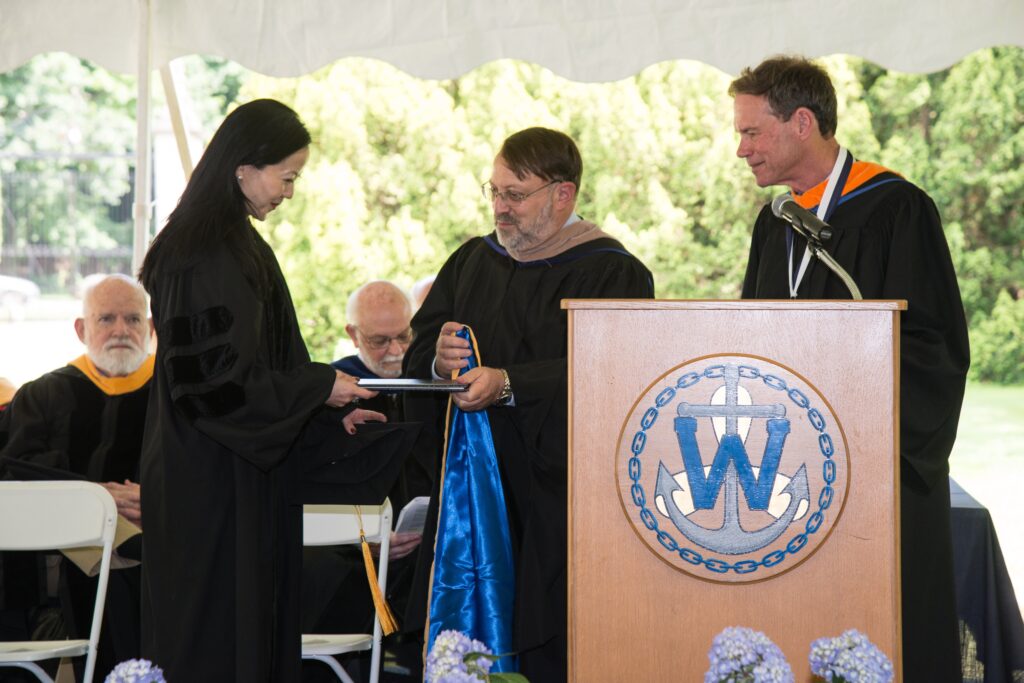
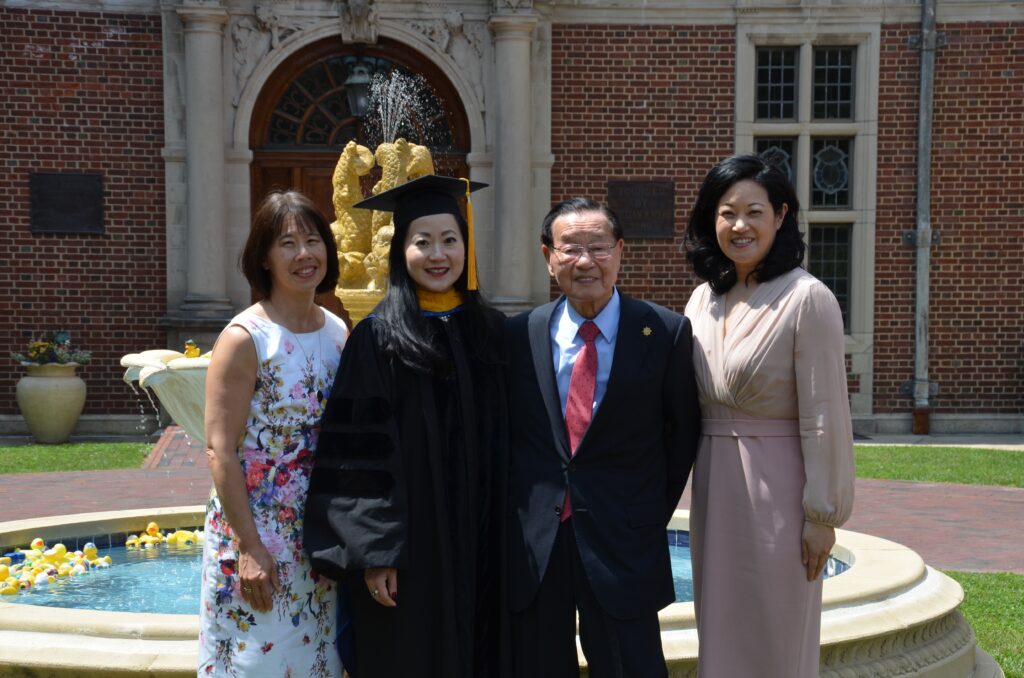
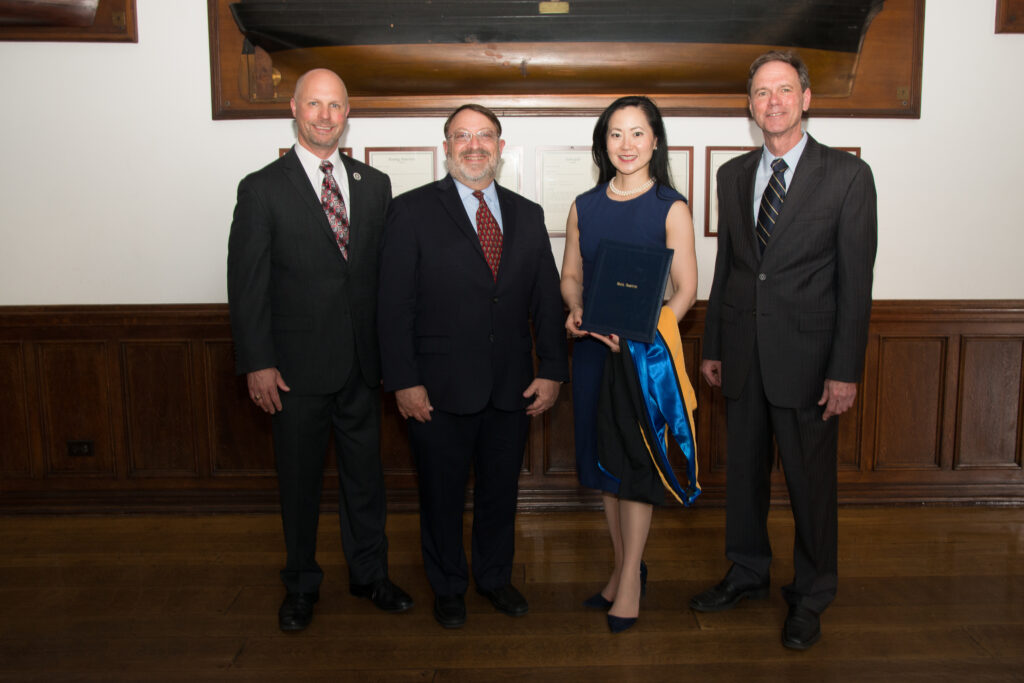
Angela’s passing is a profound loss not only to her family and the Foremost Group but to the entire maritime industry and the communities she touched. Webb Institute’s Chair of the Board of Trustees, Bruce Rosenblatt, reflected,
Angela represented the very best of our values at Webb – innovation, integrity, and a deep commitment to community. Her vision and compassion will continue to inspire future generations of leaders. As we mourn her loss, we also celebrate Angela’s remarkable life and the great impact she has left on the world. She will be deeply missed, but her legacy will live on in the hearts and minds of all who had the honor of knowing her and learning from her leadership.
Our thoughts are with Angela’s family during this difficult time.
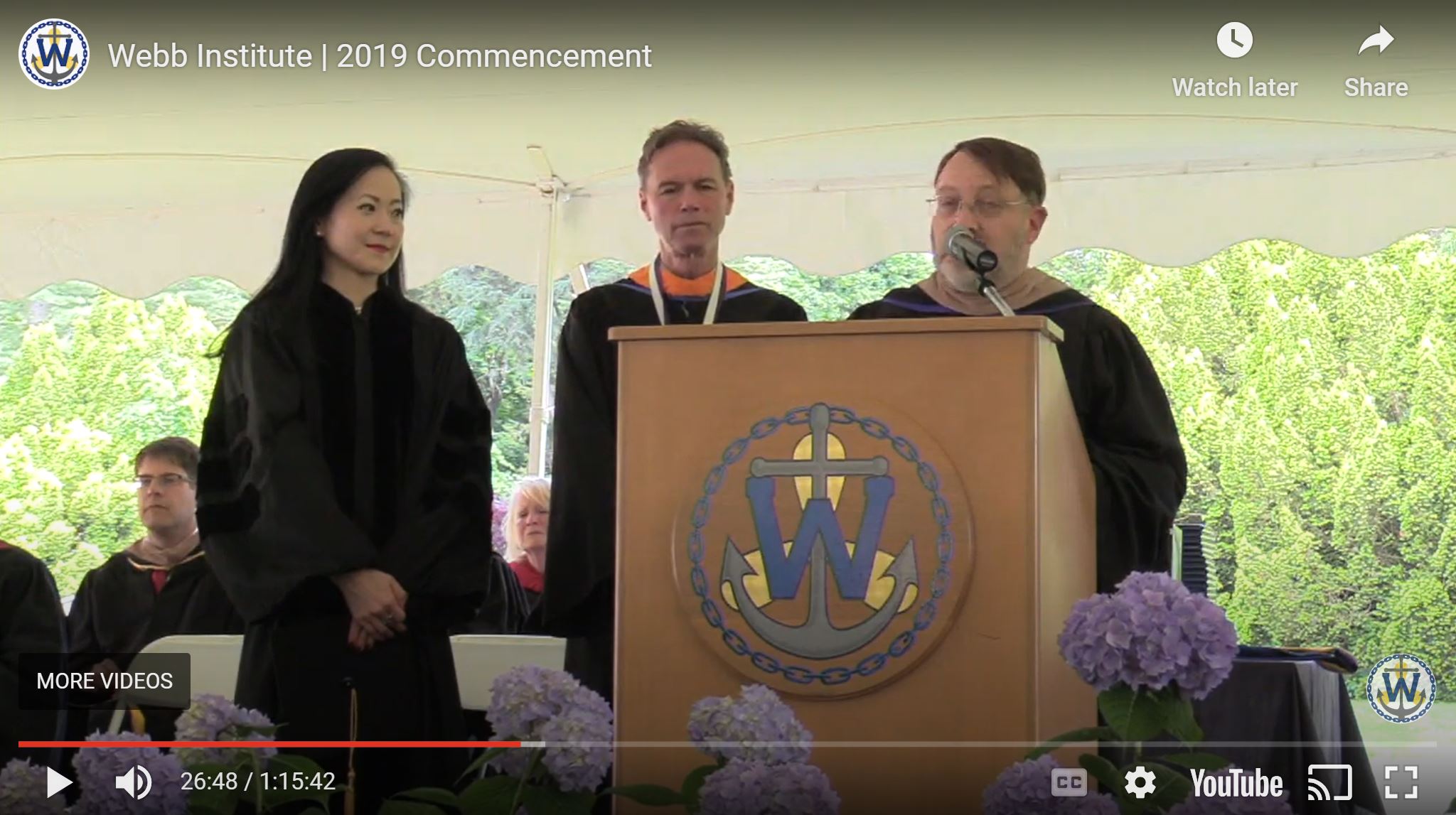
A leading force in the maritime world, Angela’s legacy is one of grace, compassion, and visionary leadership. Her profound love for her family, community, and the maritime industry shone brightly during her memorable and inspiring speech at Webb Institute in 2019. It was a proud moment for us when our Chairman of the Board, Bruce Rosenblatt, honored Angela with the degree of Doctor of Science (Hon) and inducted her as an honorary alumna into the Webb Alumni Association, a testament to her remarkable contributions and the deep bond she shared with our community. Angela was more than a distinguished guest; she was a cherished part of the Webb family.
Bringing Nutrition Education to Webb

 By Kayla Green

Kayla demonstrating proper smoothie-making technique.
Nutrition initiatives in college are crucial for promoting a healthy lifestyle and improving the overall well-being of the student body. I realized the importance of maintaining a balanced diet and making informed food choices when I was in college, and I continue to use what I learned to make health-focused decisions in my life. FLIK, Webb’s culinary service prides itself on putting “wellness center stage.” They provide a wide range of fresh fruits, vegetables, and whole grains on their menus and account for a variety of dietary restrictions and allergies. Having these options readily accessible makes it easier to prioritize nutritious meals and snacks; however, even so, knowing what to eat to maintain a healthy and balanced diet can be difficult.
At Webb, where students are regularly challenged by a rigorous curriculum, packed schedule, and academic stress, maintaining a healthy lifestyle is especially important, but can often fall behind other priorities.
This Spring, the Office of Admissions, therefore partnered with health educators, to educate our community on nutrition. This started with a Monday Lecture from Christina Brockett, MS, CNS, LDN, a licensed Clinical Nutritionist, who offers individual nutritional counseling, group nutritional programs, custom educational talks and presentations, and corporate wellness programs. Ms. Brockett also explored how nutrition impacts mental health. At the Monday Lecture, Ms. Brockett provided Webbies with insight on how to properly fuel their bodies and adopt good habits while trying to meet the demands of Webb’s rigorous academic program. Using Webb’s food menus provided by FLIK, she tailored her presentation to Webb’s current food offerings. Her ability to present the subject in an engaging way, while connecting it to the Webbie experience made the presentation relevant and memorable.
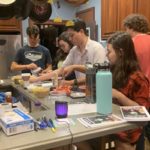
Webbies enjoying nutritional snacks.
Building off of this lecture, I had the opportunity to co-host several mini, cooking classes with Anna Boyd, MS, RD, RND (and Webb Professor Spenser Boyd’s wife), whose field of expertise is in nutrition and dietetics. Final exam season is typically a time when studying takes priority and healthy eating takes a backseat, which can impact student performance. I, therefore, developed a Brain Booster Smoothie Bowl demo series. Smoothie Bowls are a healthy, but tasty snack that can support students with the nutrients needed for a full day of studying.
The goal of these initiatives was to provide information that could equip students with the practical skills, nutritional knowledge, and appreciation for healthy eating. These classes have the potential to shape one’s approach to food and promote a balanced, nutritious lifestyle. By prioritizing the physical well-being of students, colleges can create a supportive environment that fosters healthy habits and empowers individuals to make positive choices for their long-term health and success.