
Society of Women in Engineering
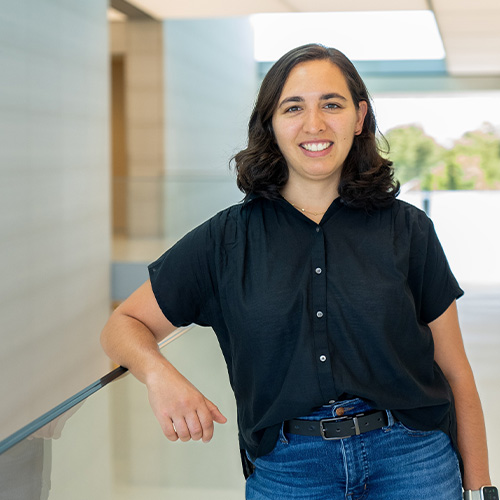
by Simmy Willemann ’10
At fifteen years out from Webb, I am no longer in the maritime industry, but I look back fondly on Webb. I now work at Apple decarbonizing consumer electronics, and I’m a mom of a very active and happy 16-month-old, Sahni, who I love playing with. My job is all about problem solving and understanding how things are built, so we can manufacture them differently. Motherhood takes hard work, including all nighters, a sense of humor, and creativity. These themes very much remind me of my time at Webb.
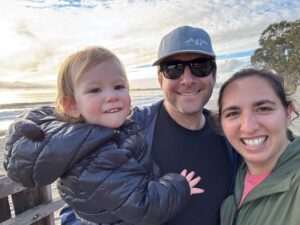
Simmy with her family
In October 2024, I had the pleasure of attending the Society of Women Engineers (SWE) Conference in Chicago. The real highlight of being at SWE was meeting the Webb Junior Women – Annabel, Rebecca, Zoe, Millay, and Ally! I was expecting to feel out of touch with the school as I haven’t visited in a while but was happily surprised to connect with these lovely Webbies as if they were in my Webb class. When I meet students from other colleges, I feel a generational divide but that wasn’t so with Webbies. Most fun was sharing all the stories about Webb traditions and crosscorrelating what I had heard changed and what they had heard things were like before. How cool that women live in Stevenson Taylor Mansion now! It’s life-affirming to meet younger Webbies and see their drive and spirit.
At SWE, I was on an Apple panel featuring Women in Operations. I shared my career path from Webb to MIT to Consulting to Apple Mac to Apple Environment and the type of support I received along the way. I now manage three teams at Apple. The Environmental Product Managers lead environmental initiatives including carbon and recycled content on each Apple product line. The Environmental Technology team proves what’s possible, from proof-of-concept manufacturing scrap recycling to iPhone end-of-life disassembly automation. The Safety Subject Matter Experts keep workers in our supply chain safe.
I also shared what it’s like to be a mom and work full time in a leadership position. I didn’t know how I’d feel about going back to work after maternity leave but I’m happy to share that I feel fulfilled both working at Apple and being a mom. My husband and I share parenting responsibilities equally. When there are tradeoffs to be made between my daughter and my work, my daughter is now my priority. I know I provide great value at work already and that I don’t need to be on every call or work trip.
At the SWE Conference, I shared three pieces of advice I have for students at the start of their journey:
- Perspective and what we choose to think about and spend our time on is everything. Focus on what you love doing (and financial security). If you’re spending time on anything else, ask yourself if you’ll care about dropping it when you’re 80? If not, drop. Seneca’s “On the Brevity of Life” gave me perspective on how short life is if you’re not living it for yourself. Once I started making time for violin gigs, my sense of self was strengthened. I could have a bad day at work but a great violin performance, and I was happy. I might have messed up at a violin gig, but I had a great work presentation, and I could still be happy. I’ve found that multiple identities tend to strengthen me and make life more fulfilling.
- People make work more fulfilling than the work itself. Choose teams with people who will encourage you to grow and give you a sense of belonging. If you don’t feel you have community now, look for it. Avoid being so focused on the results that you don’t get to know the people and build relationships.
- It’s never too early in your career to support others. As a woman working in multiple maledominated industries for 15 years, I can share that support goes a long way. Much of the support I’ve received has come from men and rather unexpectedly — asking for my opinion in a meeting, assigning me a visible project that let me prove my skills, or giving me encouragement or specific feedback on how I can improve. The opportunity to support others is there if you keep an eye out for it. If you don’t know what to do, ask others what their biggest challenge is and how you can support them. Those are two of the kindest questions especially from managers to employees – and then listen and follow up
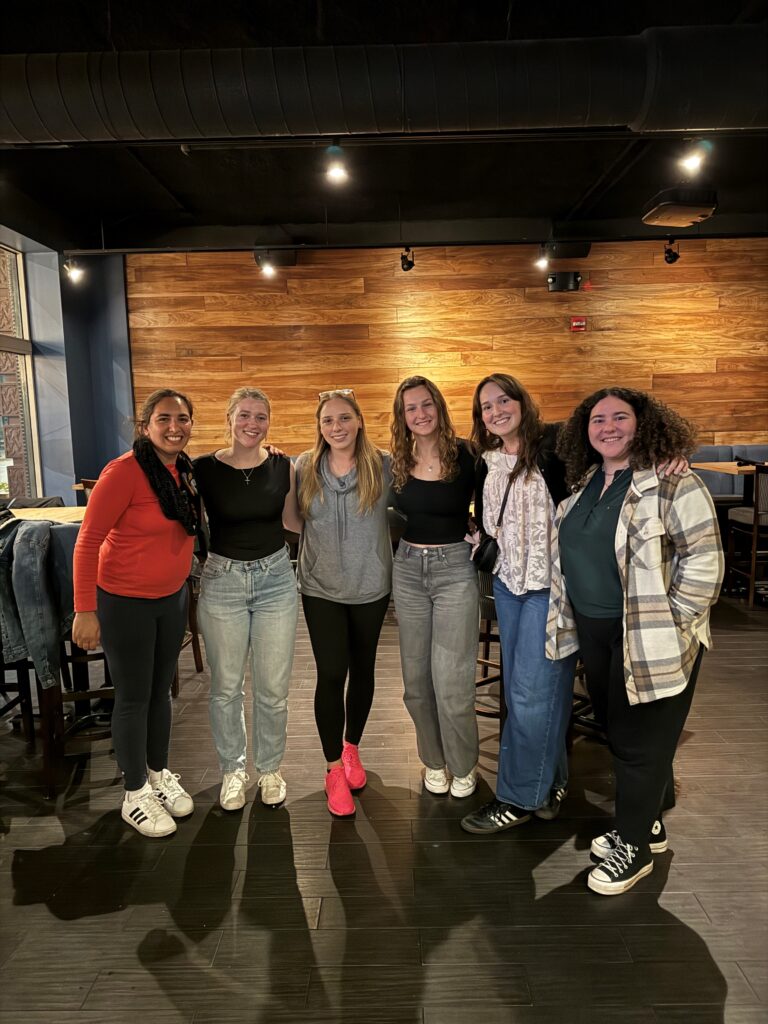
Simmy with the Class of 2026.
Life at Webb and a New Educational Partnership Agreement

by Dr. Matthew McMahon, Assistant Professor of Engineering Sciences
“Woodshop open!” my son exclaimed one evening as we strolled past two students hard at work on their Senior thesis. You’ve likely never met a toddler with a more Webb-centric vocabulary. My wife and I are continuously surprised by his asks to “go in mansion,” “swing gazebo,” “ring bell at boathouse,” and “say hi to Gee-yail-mree” (as he calls Gailmarie). And as impressed as we are with his word recall and sense of direction on campus, we are equally impressed by the students’ maturity and receptivity to living alongside our young family.
Whether simply stopping to wave hello or going out of their way to make conversation, the students are not only polite and respectful but also willing to engage and develop a deep sense of community. It is a privilege to witness and share in the pride and excitement with which Webbies blend the social dynamics of academia with the everyday rhythms of campus life. Cheering on the Webb basketball team, watching the freshman boat races, attending a regatta, and listening to the Webbstock bands are just a few of the many settings that present opportunities to build solidarity and connections with the students. And these casual encounters allow for meaningful exchanges – discussions about coursework, advice for careers, or conversations about Winter Work.

Thomas standing by the fountain and looking at Webb – the mansion he calls home.
These interactions naturally complement the internal dynamics of classroom instruction and allow me to approach academic mentorship more wholistically. Among my aims as a Webb professor is to delineate potential career paths for students and help students build a professional network that can support their first steps on those paths. I often relate to student mentees how integral professional networking and collaboration is to my own work as a Materials Engineer with the Naval Surface Warfare Center, Carderock Division (NSWCCD).
With these goals in mind, I have worked towards establishing for the Webb students what I see as a valuable privatepublic collaboration that will enhance opportunities for experiential learning, mentorship, and networking. Through a new Educational Partnership Agreement (EPA) between Webb Institute and NSWCCD, Webb students will, during the academic year, be able to access state-of-the-art research equipment at NSWCCD facilities, collaborate with research mentors on thesis proposals and research projects, and connect with a wide range of Navy professionals for an insider’s glimpse of a career with the Navy. Similarly, NSWCCD engineers will have the opportunity to visit Webb, access Webb’s research capabilities, and present upcoming recruitment opportunities to students.
This exciting new EPA strengthens the relationship between Webb and NSWCCD and allows for the exchange of innovative ideas and the execution of cutting-edge research. The collaboration resonates with the pursuit of academic and engineering excellence that I have come to observe firsthand in Webb’s highly motivated student body, and I am confident that Webbies will meaningfully contribute to building the collective expertise and benefit from the professional exposure that the EPA will provide.
My SpaceX Winter Work Internship
By Burke Kanematsu ’25
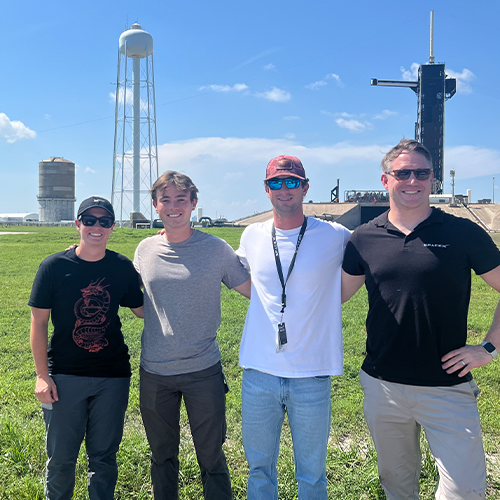
Last summer, and again this winter, I had the incredible opportunity to intern at SpaceX as part of the recovery team in Long Beach, California. I worked as an engineering intern, supporting the operations of the West Coast droneship Of Course I Still Love You and assisting with the transition of the Dragon recovery vessel Shannon to the West Coast.

Carl and Burke in a dragon training capsule.
I first reached out to Carl Webster ’03, a Webb alum currently at SpaceX, almost a year before the internship started. SpaceX requires a minimum internship length of 12 weeks, while Webb’s official internship period is only eight weeks. Navigating this timing misalignment wasn’t easy, but Carl was instrumental in helping bridge the gap. T hanks to his mentorship and support, I was able to join the team and return later for Winter Work in January and February. To other Webbies thinking about their internships: start reaching out early. There are many Webb alumni like Carl Webster who want to help you.
What struck me most about SpaceX’s work culture is the ownership all engineers take over their systems and projects. Each engineer is responsible for ensuring their system is operational for mission success and that any necessary projects are completed before critical deadlines. Interns are given that same level of responsibility with real, challenging projects where you’re the lead. That means the work you do matters, and sometimes, it means long hours troubleshooting to keep launches on schedule.
Because of a standard Non-Disclosure Agreement (NDA), I signed during onboarding, I can’t share specific details about the projects I worked on. But I can say that the experience challenged me technically and personally. It gave me confidence in my problem-solving skills and a clearer sense of what kind of engineer I want to become. One of my biggest takeaways was learning how to work effectively with tight deadlines and high stakes.
My time at Webb prepared me well for this experience. The emphasis on systems thinking, hands-on engineering, and tight-knit teamwork at Webb mirrored the environment I found at SpaceX. And having a strong foundation in ship systems definitely helped, considering the marine side of recovery operations.
The team at SpaceX was filled with smart, driven engineers who were also welcoming and supportive.
It felt great to be part of a culture where everyone is pushing boundaries, yet is still willing to take the time to mentor and help each other.
Knowing that the projects I worked on were part of real missions was incredibly motivating, and I’m very grateful for the opportunity.

Burke and another summer intern, Duncan, on the ferry to Catalina for a team bonding event.
The Many Lives & Accolades of Gene Schorsch ’52
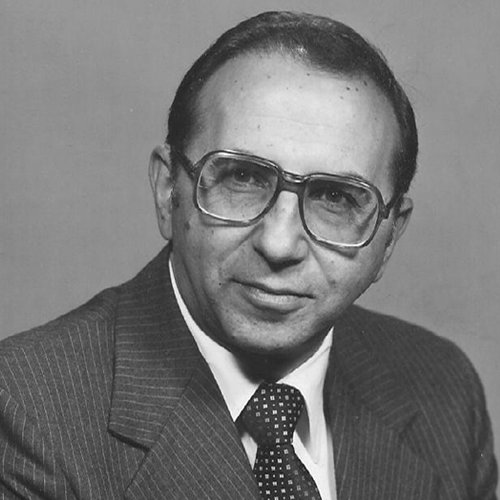
by Kaye Lin, Director of Communications & Marketing
The Man Who Cut Ships in Half
It was a bright Spring afternoon when I found myself staring at a plaque tucked on the wall of Webb’s Couch Academic Center. At first glance, it looked like any other recognition of alumni generosity, but if you leaned in a little closer, right there at the bottom, were the quiet words that summed up the entire Webb experience, at least through the eyes of Gene Schorsch.
It didn’t talk about his rocket division, the ships he reimagined, or the lawsuits he pursued. It spoke about the challenge, and what Webb does to the students who rise to meet it.
“I don’t think it’s me,” Gene said in our initial call. “I think it’s Webb.”
Gene didn’t start his Webb story with fanfare. In fact, he revealed that he didn’t get in on his first try. Or his second. But on his third. He lacked a year of foreign language – German or French – a small technicality that closed the door to his dream. But Gene wasn’t the type to walk away.
In 1948, after his third try, the doors opened – and from that moment, he never stopped building. Not just ships and systems, but principles, trust, and a way of thinking that would change everything he touched.
After graduating in 1952, Gene went to work at Sun Shipbuilding. He was young, but not the type to play it safe. When the team was asked to build six old-fashioned breakbulk ships, Gene thought, “What if we don’t?”
Instead, they did the unthinkable. They cut ships that were already in the water in half, extending the ships by 125 feet and deepening their hulls by nine feet, then redesigned them into something more forward-thinking.
Containerization was coming, and Gene could see it before most.
“We cut ships in half and made them longer,” he recalled with a smile. “That’s how bold the thinking was.”
Faced with a contract to build six outdated cargo ships, Gene and his team convinced the client and the government to approve a radical overhaul: extending the ships by 125 feet and deepening their hulls. It was a massive structural shift, but a necessary one as containerization transformed global shipping.

SNAME Photo 10/21/77 – New Flexible Shipbuilding and Ship Repair Facilities
From Ships to Space Space
It wasn’t long before a man walked into the shipyard asking for help building… rockets.
Most people would have laughed him off. Not Gene.
“We didn’t wait for the contract. We built a fake rocket case with ship steel to prove it could be done.”And it worked.
The mock-up impressed Aerojet enough to award Gene the contract for the largest solid rocket casings ever built at the time. At just 34, he was featured in Fortune Magazine, but you’d never hear that from him unless you asked.

Webbies of the graduating class of ’52 in 2019. Gene Schorsch, John Sims, Tom Gillette
Integrity in the Details
Gene shared many great stories, and all of them led to the important themes of integrity and that the devil is in the details.
When two ships he helped design, lost their propeller blades at sea, most blamed it on underwater collisions. Gene wasn’t convinced. He went to Amsterdam, inspected the damage himself, and quietly ran tests using dye-penetrant methods. He realized the problem was in the casting – flaws hidden deep inside the metal.
“You don’t learn this stuff in the classroom,” he told me. “You learn it when you’re responsible for people’s lives.”
He pushed for replacements, even when manufacturers resisted. He was young. They were powerful. But in the end, he was right. The ships sailed again, and safely it did.
Gene wasn’t just an engineer. He was a systems thinker. A builder of ideas.
Redesigning the Industry
When oil companies in Alaska’s North Slope needed to move crude oil across the Arctic, Gene pitched something radical: he would design the tanker, build it, own it, and operate it. All they had to do was pay a daily charter rate. For us nowadays, think of oil tankers as Uber rides.
“We didn’t just build a ship. We changed the entire way the industry worked.”
And when delays in the Alaskan pipeline left one of his tankers idle, he turned it into a grain carrier, and (because of course he did) he invented a vacuum system to unload it, earning a U.S. patent along the way.
Webb Always
Through all of this – every design, discovery, and decades-long lawsuit against corporate fraud – Gene remained, at his core, a Webbie. He and his wife Ruth gathered every year with three other Webb couples for a three-day weekend. He returned to campus. He mentored. He remembered.
Now, going back to the original question I had asked him at the beginning of our meeting, “What made Webb students so extraordinary?”
He told me about a time at Webb when he sat in the basement of Stevenson Taylor Hall with his roommate, sipping Cokes at midnight, wondering why Webbies were built the way they were. They landed on this:
“A lot of us came from hard beginnings. Webb took that raw material and made us better.”
That’s what he believed, and that’s what he lived. He didn’t just walk through Webb’s gates; he carried the place with him for the rest of his life.
The Small Print
If you ever find yourself in the Ruby Lounge, take a moment to lean in close and read what’s engraved on Gene’s plaque.
You won’t see a list of accomplishments. You’ll see a message that only someone like Gene could leave behind – a message about challenge, courage, and what happens when someone believes in you enough to expect everything from you.
Because for Gene Schorsch, Webb wasn’t just a school. Webb was where everything began.

Ruby Lounge plaque. The quote at the end of the plaque states, “Unimaginable achievements await you. Embrace the challenges.”
Beyond the Classroom | My First Year at Webb
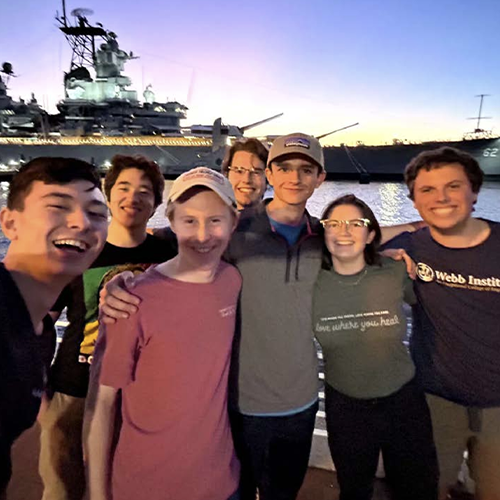
by Joseph Giresi ’28
From meeting established graduates in more unique areas of maritime specialities than I can count on my fingers to being sent a long way across America to the icy-cold state of Wisconsin, my experience as a freshman at Webb Institute over the past year can be described as nothing less than a lifechanging expedition.
The most exciting parts of my freshman year were the cruise, shipyard, and SNAME-related experiences that Professor Bradley Golden organized. Onboard Carnival Venezia Cruise with Hampton Dixon, I saw the ins and outs of a cruise ship’s operation in the guided tour of the ship’s public accommodations and backends of the crew’s operation. Our visit to Philly Shipyard prepared me for my interests and goals in my own upcoming shipyard internship.

Joseph utilizing the student kitchen and baking an apple pie.
Although the winter weather in Wisconsin was harsh, the people were loving and kind, with shipyard workers ready to help and share stories about their life and their profession. At Fincantieri Marinette Marine (FMM), Wesli Rivera, an experienced painter, welder, electrician, and more for over a decade, advised me to ask many questions and learn as much as possible. Taking this advice to heart, our dinner with Webb Institute alumni Sean Smith ’02 led me to explore my curiosity about his life, asking him about stories throughout his career and as a Webbie. He shared with us duties he held at FMM, including being the Chief Naval Architect and corrosion specialist, helping me understand the relevance of corrosion learned with Professor Matthew McMahon in Chemistry. Because of this advice, I look forward to pursuing future roles in project management, stability calculations, or more work in using Navisworks to review accuracy of ship construction. Lastly, the opportunity to travel to a faraway place from the northeast provided me with the experience to see remarkable places such as the beautiful Lake Michigan, a lake so frozen in the winter that people drove cars on it like it was dry land.
What I can say having completed freshman year is that Webb Institute changes lives, and that Webb Institute changed my life. From trips including countless class and schoolwide SNAME events, Norfolk boat show, trips to maritime academies, and exciting events outside school, the closeness of the Webb Institute community has enriched these experiences and my endeavors. Despite the academic difficulties at some points, these are also accompanied with laughter, joy, and jokes in conference rooms as our class prepares for upcoming exams. These great memories experienced with my classmates despite occasional rough waves on the way have truly made me glad to be called a Webbie and part of this community.
No matter how hard the work gets or how painful climbing upside down in a dusty, narrow space on a ship can be, the obstacles are always overcome with support from my friends, classmates, professors, and the exciting journeys that come my way.

Joseph and Webbies attending a first Communion and Confirmation.